
Hello Future > 4.0
When we look back at the last ten years from our vantage point here in the middle of the decade, a pattern emerges: What was once considered revolutionary is now merely a hygiene factor. The term “Industry 4.0,” coined at the Hanover Fair in 2011, is now 15 years old. It stands for the networking of machines, data collection, and the Internet of Things (IoT).
Welcome to 2026
But in 2026, connectivity alone is no longer enough. We have the data. We have the sensors. We have the dashboards. The question is no longer whether we are digital, but how intelligent, autonomous, and adaptable our digital ecosystems are.
We are standing on the threshold of a new era. I call it “Future > 4.0.”
Hyperautomation Market Insights
Global Market Analysis (2025–2034)
Market Size & Growth
Global Market Share
Regional Powerhouses
Europe Breakdown
Asia-Pacific Breakdown
This blog post is the kickoff to a series in which we will explore what lies beyond Industry 4.0. It is no longer about simply gathering information, but about cognitive processes, agent-based decisions, and organizational forms that are as fluid as the markets they serve. Anyone who still believes today that the digitalization strategies of 2020 are sufficient to survive until 2030 is subject to a dangerous fallacy.
Newsletter
There are three fundamental drivers for why we must look outside the box now, in 2026—and do so more radically than ever before:
1. The Evolution of AI: From Chatbot to Autonomous Agent
Do you remember the hype surrounding Generative AI in 2022 to 2024? We marveled at computers writing text and painting images. But that was just the “play phase.”
In the world of “Future > 4.0,” AI has grown up. We are no longer talking about assistance systems waiting for a prompt. We are talking about Agentic AI. In modern companies of 2026, AI acts as a proactive team member. It doesn’t wait for commands; it pursues goals.
- The Difference: An “old” AI analyzes sales figures and generates a report. A “Future > 4.0” AI detects a trend break, identifies the root cause in a disrupted supply chain, scouts alternative suppliers, checks their compliance certificates, and proposes three validated options to the human decision-maker for approval.
- The Relevance: In a globalized economy where reaction speed is the hardest currency, we cannot afford to have data sitting in silos waiting for a human to find the time to interpret it. The competition—especially from the highly dynamic markets of the US and Asia—never sleeps. Those who use AI only as a “better Excel” will be overrun by those who deploy AI as “scalable intelligence.”
2. Software-Based Automation: The End of the Manual Interface
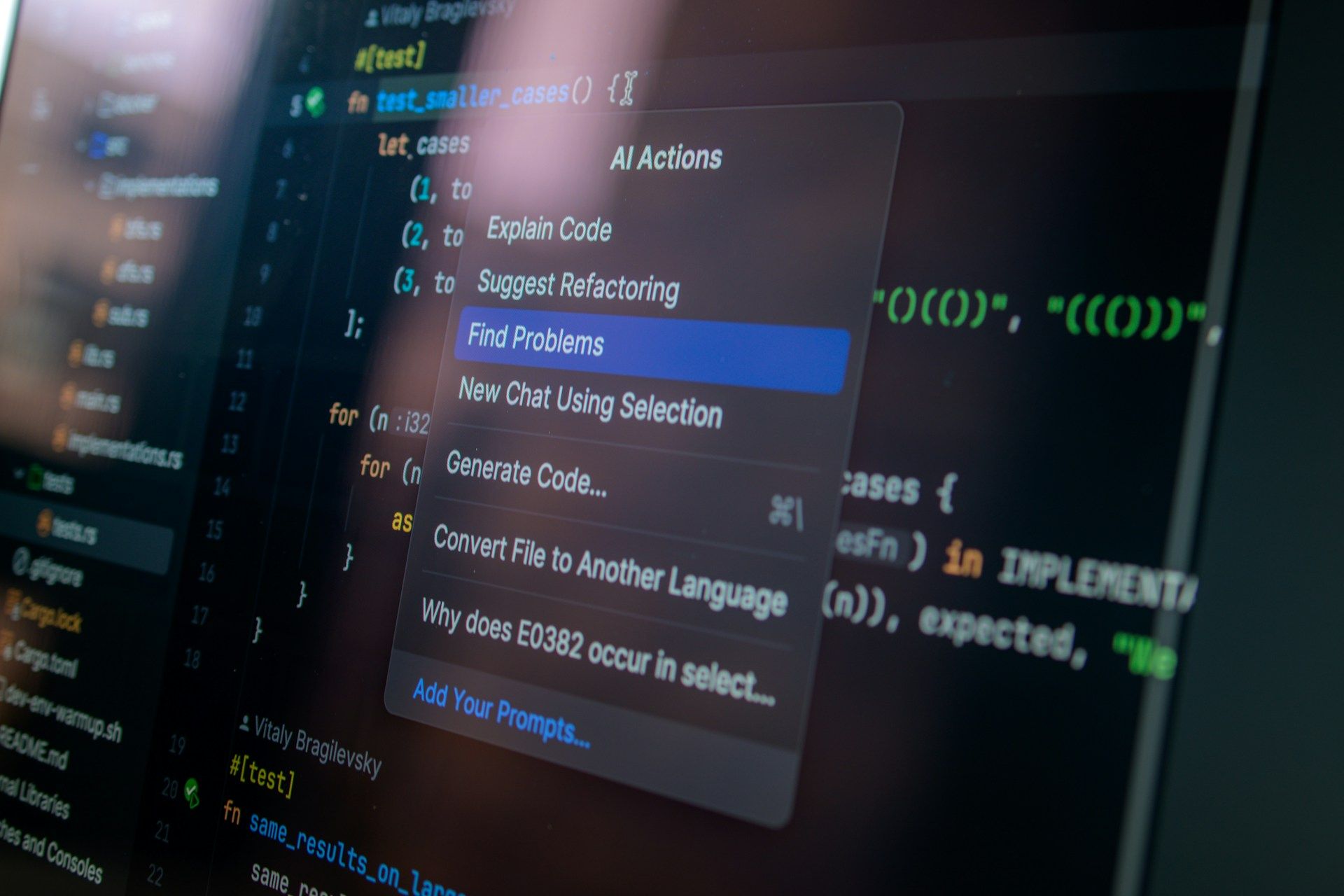
The second pillar of “Future > 4.0” is consistent, software-based automation—often referred to as Hyperautomation.
For a long time, we tried to map analog processes one-to-one digitally. We replaced the paper form with a PDF. That is not transformation; that is digital cosmetics. Success in 2026 means rethinking processes fundamentally—Digital First and AI First.
Unfortunately, the reality in many companies is still defined by media breaks. Data is exported from the ERP, edited in Excel, and manually transferred to the CRM. This “glue work” ties up valuable human resources that we simply no longer have given demographic changes.
In a “Future > 4.0” world, software is the invisible infrastructure that connects everything. APIs are the veins of the company. When an event happens in System A, it triggers a chain of actions in System B, C, and D in milliseconds.
Why is this existential?
Because complexity costs are the silent killer of margins. Manual interventions are error-prone, slow, and expensive. Software-based automation creates not just efficiency, but resilience. A fully automated process is scalable—it works just as precisely with 100 orders as it does with 10,000. In a volatile global economy, this scalability (both up and down) is the only shield against external shocks.
3. Modern Organizational Structures: Hierarchy Eats Strategy
However, technology is worthless if it is trapped in a corset from the 19th century. Perhaps the most important, yet most difficult element of “Future > 4.0” to realize is organizational transformation.
The classic pyramid structure—thinking at the top, doing at the bottom—is too slow for the speed of 2026. If a decision has to pass through five hierarchy levels, the market opportunity is often gone before the ink is dry.

We see a discrepancy: We introduce agile software but keep rigid departmental thinking. This leads to frustration and inefficient “shadow IT.”
What does modern organization mean today?
- Decentralized Decision-Making Authority: Data and AI make it possible to shift decisions to where the problem occurs—to the “frontline.”
- Networks Instead of Silos: Teams form temporarily around tasks and projects, not permanently around functions.
- Lifelong Learning as a KPI: In a world where technical knowledge doubles every 18 months, the ability to learn is more important than the accumulated knowledge of the last 20 years.
Companies must become “bionic.” They must merge the technological excellence of machines with the creative, ethical, and strategic excellence of humans. The human shifts from being a “machine operator” to an “architect of value creation.”
The View Ahead: Why Now?
Why am I starting this “Hello Future > 4.0” series right now? Because in my daily work as an interim manager and consultant, I see the gap widening.
There are companies that have understood that we are in a polycrisis that can only be overcome with radical innovation. These companies are using the current consolidation phase of the economy to reinvent themselves. They are investing counter-cyclically in AI agents, platform economics, and new leadership models.
And then there are those who hope the storm will pass and “everything will go back to how it was.” That interest rates will fall, orders will come in on their own, and the business model of 2015 will carry them through to 2035. This hope is deceptive.

Technological progress does not wait for us to catch up. The leap from Industry 4.0 to a cognitive, hyper-automated economy is happening—with or without us.
What to Expect in This Series
In the coming posts, we will dive deep into the subject matter. We won’t dwell on buzzwords but will illuminate concrete use cases and strategies:
- How do you implement “Agentic AI” into traditional business processes?
- What does the CFO of the future look like (“Chief Future Officer”)?
- How do we build IT security that withstands AI-based cyberattacks?
- And most importantly: How do we take people along on this journey without overwhelming them?
“Hello Future > 4.0” is an invitation. An invitation to critically question the status quo and to have the courage to conceive of technology not just as a tool, but as a strategic partner.
The future belongs to the brave. Let’s ensure we are among them.
I look forward to exchanging ideas with you.
