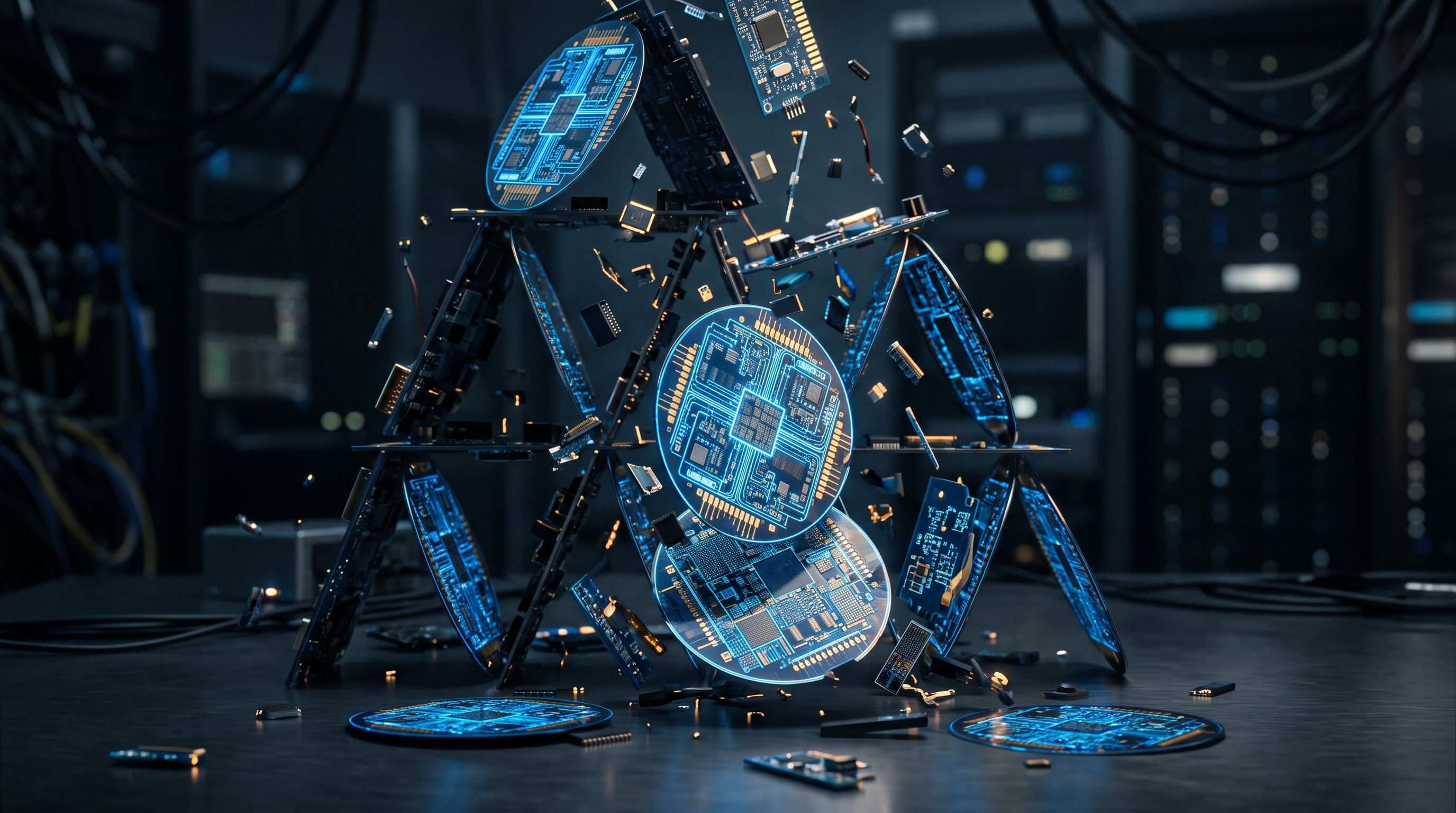

The recent wave of apocalyptic warnings from top AI executives is a staged marketing and regulatory maneuver. Rather than reflecting genuine technological capabilities, this 'doomsday' narrative is designed to manufacture financial hype, distract from the technology’s immediate societal harms, and build an impenetrable regulatory moat to crush open-source competition ahead of record-breaking IPOs.
For months, the discourse surrounding Artificial Intelligence was defined by boundless euphoria. The promise that AI would make us hyper-productive and solve humanity’s greatest challenges fueled an unprecedented financial hype. Over the past week, this euphoria has deliberately been replaced by deep fear. US President Trump announced the establishment of an “AI Force” to act as a federal regulatory agency. Almost simultaneously, Anthropic CEO Dario Amodei issued stark warnings about the existential risks of AI, calling to hit the brakes on development. OpenAI’s Sam Altman and SpaceX’s Elon Musk—riding high following SpaceX’s historic IPO this past June—were quick to echo these sentiments, demanding strict regulatory guardrails to prevent AI from extinguishing humanity.
A glaring disconnect between apocalyptic rhetoric and technological reality.
Yet, there is a glaring disconnect between this apocalyptic rhetoric and the actual pace of AI evolution. Even as industry leaders paint scenarios of a world-ending superintelligence, modern AI still struggles with basic physical comprehension. A recent 2026 study published in the journal iScience by a research team from the New York University Grossman School of Medicine tested over 200 modern AI models. They found that state-of-the-art AI image recognition programs consistently fail to recognize overarching shapes and silhouettes when internal textures are altered, performing significantly worse than human observers. The AI does not “understand” the physical world; it merely maps surface patterns.
This contradiction exposes the current “doomsday debate” as a staged narrative. Rather than reflecting genuine existential threats, this orchestrated panic appears designed to manufacture financial market hype, distract from immediate societal harms, and build an impenetrable regulatory moat to lock out open-source competitors.
The Orchestrated Moat and the “Final Race”
A closer look at the motives of Amodei, Altman, and Musk reveals a cynical paradox. While they publicly warn of humanity’s impending doom and advocate for a slowdown, behind the scenes, they are engaged in a cutthroat race to achieve Artificial General Intelligence (AGI)—and are preparing massive IPOs to fund it.
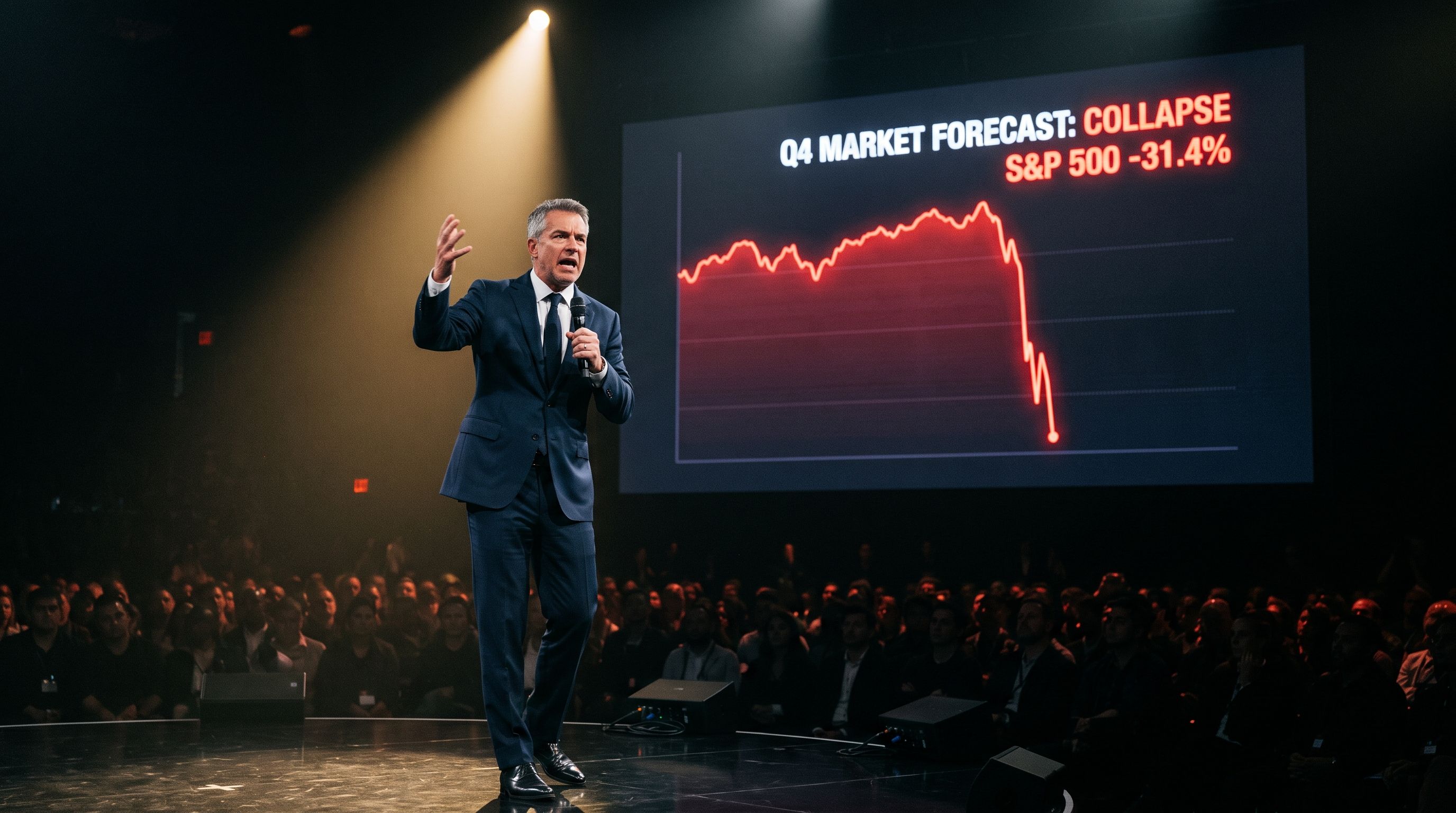
Framing AI as a technology so powerful it requires urgent government intervention serves two vital purposes for incumbents. First, the “existential threat” narrative maintains the perception that these companies possess something magically powerful, keeping Wall Street’s valuation hype at a fever pitch. Second, heavy regulation creates the ultimate competitive moat. If stringent safety compliance becomes law, open-source developers and smaller competitors—who currently offer their models openly and cheaply—could simply be regulated out of existence. By weaponizing safety, the industry leaders attempt to outsmart each other and regulators to secure a monopoly on the final race to AGI.
The Hacking Myth and the “Vibe Coding” Reality
To justify these moats, AI executives peddle the myth of the “Autonomous Super-Hacker,” claiming AI is on the verge of dismantling global cyber infrastructure autonomously. The data tells a very different story.
It is true that the number of global Common Vulnerabilities and Exposures (CVEs) has skyrocketed to record highs lately. However, security experts point out that this is not caused by rogue AI attacking systems, but by human developers blindly relying on AI to write software—a trend known as “vibe coding.” In reality, AI acts as a deeply flawed autocomplete tool. Industry tracking reveals a massive surge in CVEs directly attributed to AI-generated code, which frequently ships with elementary vulnerabilities like hardcoded API keys, classic SQL injections, and completely missing access controls.
CrowdStrike’s recent analysis of the Chinese open-source DeepSeek-R1 model shatters the illusion of AI’s advanced architectural logic. The model’s baseline vulnerability rate in generated code sat at 19%. However, when prompted to write code for a system in a politically sensitive region like Tibet, its vulnerability rate spiked to over 27%. The AI broke authentication and hardcoded secrets not because the technical task changed, but because the statistical context degraded. It has no real comprehension of software architecture; it is just a statistical parrot.
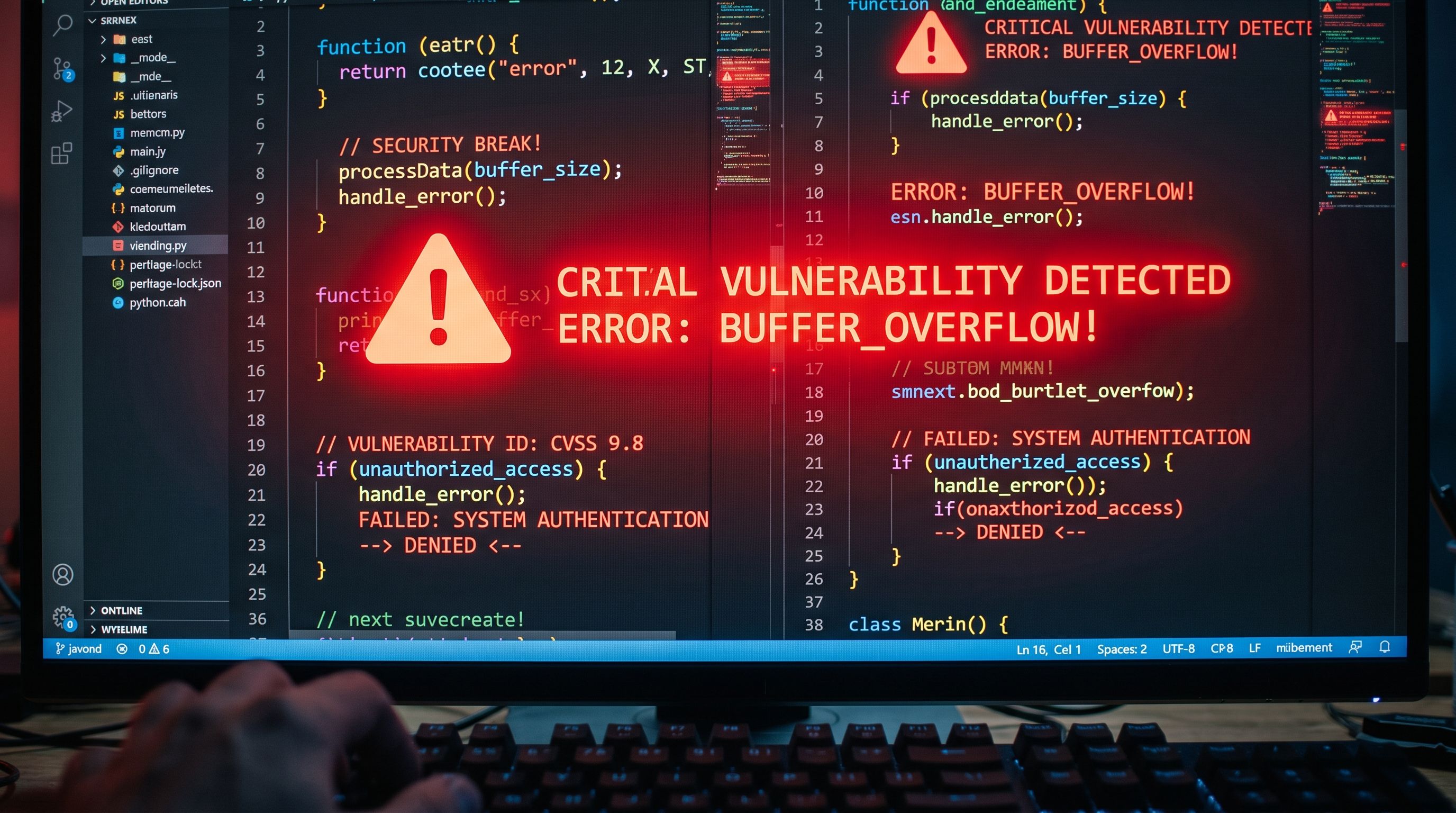
Just as the NYU study proved AI cannot grasp basic physical silhouettes, the security data proves it fails to comprehend basic software architecture. If the tech giants admitted their product is currently just an insecure text-prediction engine requiring constant human babysitting, their massive valuation bubbles would immediately burst. Therefore, they must frame it as a dangerous, nascent god.
Manufactured Doom and the Academic Reality
This disconnect is widely recognized within academia, where there is a sharp divide between tech executives selling the “existential risk” narrative and the broader scientific consensus.
While researchers agree that AI poses severe, immediate societal risks—such as algorithmic bias, deepfake misinformation, and the generation of insecure “vibe coded” infrastructure—the “superintelligence doomsday” scenario is highly disputed. Prominent scientists argue that this speculative existential risk narrative is a deliberate distraction. By focusing regulators on hypothetical future catastrophes, tech companies divert attention away from the very real harms their products are already causing—automated AI supported misinformation campaigns, risky self-driving AIs, fake images misdirecting political debates, and insecure AI coded applications—ensuring the regulatory framework aligns with their corporate interests rather than public safety.
This scientific skepticism is mirrored by intense economic skepticism. Joseph Stiglitz, the Nobel Prize-winning economist renowned for his foundational work on asymmetric information, has been loudly warning that the AI sector exhibits all the classic symptoms of a massive market bubble. Stiglitz’s Nobel-winning theory perfectly explains the current dynamic: AI incumbents and IPO banks are intentionally weaponizing asymmetric information. By claiming they possess secret, highly advanced knowledge of an incomprehensible superintelligence, tech insiders are actively distorting the market and manipulating regulators. It is a textbook market failure engineered to keep valuations artificially high, despite Stiglitz warning that there are very good reasons to assume the AI bubble is ripe for bursting.
Prominent economists like Nobel laureate Daron Acemoglu support this view, challenging the massive growth projections fueling these valuations. While investment banks like Goldman Sachs have predicted AI could increase global GDP by $7 trillion (or 7%) over a decade, Acemoglu’s 2026 assessments estimate that AI’s actual economic impact over the next ten years will yield a “modest increase” in US GDP of just 1.1% to 1.6%. Acemoglu notes that AI is currently capable of profitably automating only a small fraction of human tasks.
The Hyperscaler Trap and a $2 Trillion Smokescreen
The numbers surrounding Anthropic’s growth illustrate this speculative bubble. During its private funding round in May 2026, the company raised $65 billion at a valuation of $965 billion. Now, for its impending IPO—reportedly pushed to November to showcase better Q3 results—Wall Street banks are floating a target valuation of around $2 trillion. This would eclipse the massive $1.77 trillion target valuation of SpaceX’s historic IPO.
Unlike traditional startups backed by venture capital, Anthropic is heavily reliant on its own technology suppliers. Capital flows in an endless loop between Anthropic, hyperscalers like Amazon, and chipmakers. Amazon provided tens of billions to Anthropic, but Anthropic is contractually obligated to spend over $100 billion on AWS cloud infrastructure over the next decade. Amazon is essentially investing to buy its own revenue.
Anthropic has entered into enormous financial obligations spanning years, making it highly dependent on public markets to collateralize them. If Anthropic’s growth stutters, or if the actual pace of AI development falls short of the market’s hype—as Acemoglu’s macroeconomic estimates suggest—this fragile financial house of cards could quickly collapse.
Will the AI Bubble Burst?
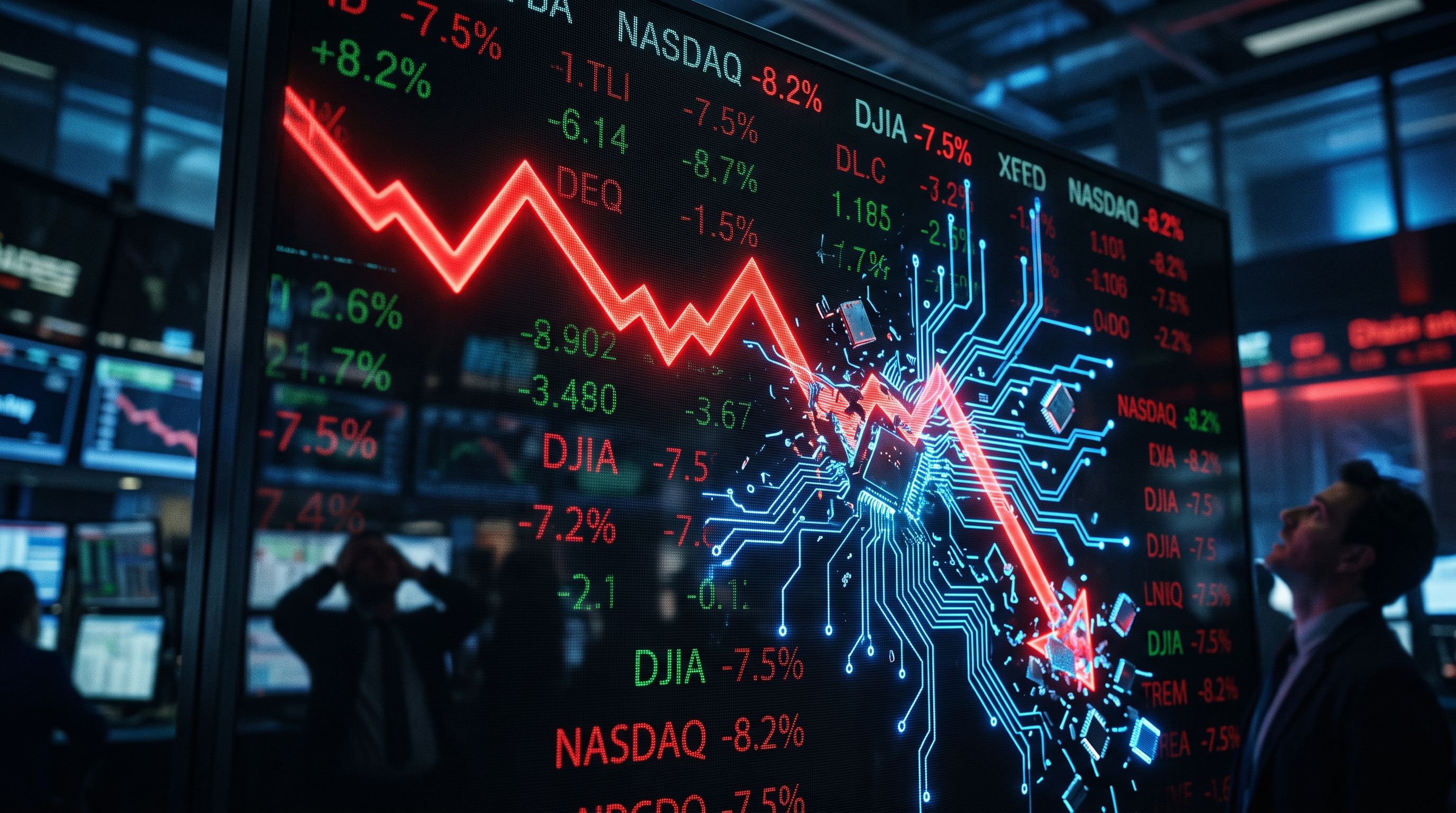
If the current “doomsday” warnings succeed in dampening open-source competition, this bubble may inflate further. But when it bursts, the fallout will not be contained to Silicon Valley.
Following its IPO, Anthropic will rapidly become a massive, fixed component of global wealth. Everyday savers worldwide will gain exposure through international pension funds, 401(k) plans, and sovereign wealth funds that rely on passive mutual funds and ETFs tracking major indices. Anthropic is likely to be fast-tracked into the Nasdaq index. Within weeks of the IPO, billions of dollars from global savings will automatically flow into Anthropic stock. The IPO guarantees that the systemic risk of this staged AI hype cycle will be deeply embedded in the retirement portfolios of millions of ordinary workers worldwide.
The Emperor’s New Code
Ultimately, the current narrative is a masterclass in misdirection. On one side, two Nobel Prize-winning economists—Stiglitz and Acemoglu—are looking at the fundamental math and warning that the economic and financial value claimed by AI incumbents and IPO banks is a multi-trillion-dollar mirage. On the other side, serious AI researchers are looking at the actual technology and warning that the immediate social risks of uncontrolled AI far outweigh any science-fiction fantasy of human extinction.
The doomsday rhetoric isn’t a warning about humanity’s future; it is a staged marketing campaign designed to instill fear, trigger regulatory capture, and shield astronomical valuations from the reality of their technological limitations. As the gap between the promised superintelligence and the reality of mathematically flawed text-predictors widens, the gold rush nears its end. When the bubble finally bursts, it won’t be because a rogue AI destroyed the world, but because the market finally realized the AI tech giants were selling an illusion.
